A Taste of Community Kitchen

The South Arm Community Center hosted A Taste of Community Kitchen as one of the event for Seniors Week Celebration in June. South Arm Community Center is one of the pioneer to have a community kitchen program for seniors.

A-Taste-Community-Kitchen-11

This event was opened to all seniors of the community centers in Richmond. There were more than 20 participants who attended this event.

A-Taste-Community-Kitchen-10

The above was a station which showcased the activities in the South Arm Cooking Club for seniors which included a coverage by Shaw TV on the program called “‘The Express”.

A-Taste-Community-Kitchen-7

The program for the day included a talk by a dietitian and A Taste of Community Kitchen. The group is divided into two and both activities ran concurrently and the groups switched half way through the program.  Sharon J. Tateishi (standing) was the dietitian who shared with the group.

A-Taste-Community-Kitchen-1

While a group was attending the nutrition talk, the other group worked in the kitchen. The group was subdivided into smaller groups to work on different recipes.

A-Taste-Community-Kitchen-8

At the end of the session, the participants got to enjoy the food that they made. The recipes for that day were … (more…)

Continue ReadingA Taste of Community Kitchen

A Discovery of Cantonese Cuisine — and Invitation to Dinner

We are continuing our journey of the Eight Great Traditions of Chinese Cuisine next with the Cantonese Cuisine.

This is the third in the series of eight dinners organized by the 8GTCC Team as we explore the rich traditions of Chinese cuisines. A few months ago, we had two very successful dinners. The first was the dinner in Alvin Garden on the Hunan Cuisine which was attended by 52 people. This was followed by a dinner focused on the Jiangsu Cuisine. That event attracted an even bigger response where almost 70 people attended the monstrous 17-course dinner in Shanghai Village.

We are now ready to take the wraps off the 8GTCC Cantonese dinner. For that past few weeks, LotusRapper and Joe had been working hard in putting together this event. I can tell you that between the two of them, they had been visiting quite a few restaurants (all on their own time and expenses too!) and doing a lot of research in the effort to learn about the Cantonese culture and cuisine.

Guangdong-Province-600x481

Being the cuisine leads, LotusRapper and Joe was just the people we needed to spearhead the Cantonese Cuisine. After all, both of them are Canto-Boys. So they will be taking us on a journey from the rustic farm house of Hunan and the ancient Chinese capital in the Jiangsu province to the riches and luxurious abundance of the Guangdong province.

The past few days were particularly frantic as LotusRapper and Joe were busy negotiating with the restaurant in the effort to finalize a fine menu with some of the best delicacies that the Cantonese has to offer. It took a while but they managed to finalize that late yesterday. Location wise, it is better than we expected as we get a private room for this. Not only will this be chance you will savour good quality delicacies but it will also be visually interesting. And to top it all, the restaurant had given us a special price too!

Because of the vastness of the Cantonese cuisine, at one point we were seriously toying with the idea of doing two dinners … one homestyle simple dinner and the other on the high-end luxurious one. While it would be easy to do a homestyle dinner, we thought we cannot make it unique and special as we wanted. I mean, for all the Chinese cuisines in Vancouver, the Cantonese cuisine is the one that everyone is most familiar with already. We even talked about doing the so-called sub-Cantonese cuisine like Chiu Chow and Hakka. We also seriously approached the thought of doing a Contemporary Chinese Cuisine, the likes of Bo Innovation and Susur Lee.

Long story short, we will now do what we felt best reflect the unique nature of the Cantonese. Their riches, extravagance and abundance are best reflected in their cuisine like no other Chinese cuisines … done in the style of a banquet.

The details of the 8GTCC Cantonese dinner is at the bottom of this post. I hope you will take the time to join us in this next exploration of Chinese Cuisine … and of the riches, extravagance and abundance of the Cantonese Cuisine.

Here … let’s start off learning a bit about Guangdong (Canton), the people and the cuisine … as presented by Joe and LotusRapper … and accompanied by a 1970s Canto-Pop song.

Take it away, Canto-Boys!

[audio:https://chowtimes.com/wp-content/uploads/2010/08/Last-Message-Crazy-Song-Sam-Hui.mp3|titles=Last Message Crazy Song (Sam Hui)]

Let’s face facts: Cantonese cuisine is the fat, bloated rock star of all regional Chinese cuisines, cruising on excess and ripe for young punks to pick off. Largely credited both in and out of China as being the “best” of the regional fares, the region has an inflated reputation to live up to, the ego to do so, and – with all caution thrown to the subjective winds – the chops to back it up.

Geography of Guangdong

The actual physical region from which Cantonese cuisine derives will vary depending on who you ask. At times it’s synonymous with the Pearl River Delta; at other times takes the whole Guangdong province into consideration; at its broadest, the term includes Hong Kong, neighbouring Guanxi, and even Cantonese immigrant fare from outside the country. As Jakob Klein puts it, “the English term ‘Cantonese cuisine’ actually conveys some of this ambiguity quite nicely.”

Jumbo-Floating-Restaurant-Hongkong

The province has primarily been a wealthy one, relative to other Chinese regions. This, to a large extent, is due to its physical location, tucked away at the sub-tropical southeast corner of the country, beneficially far from the cold, clammy hands of the Mongolian north, and the last home of the Song Dynasty before it fell to Kublai Khan’s Yuan Dynasty in 1279.

External Influences

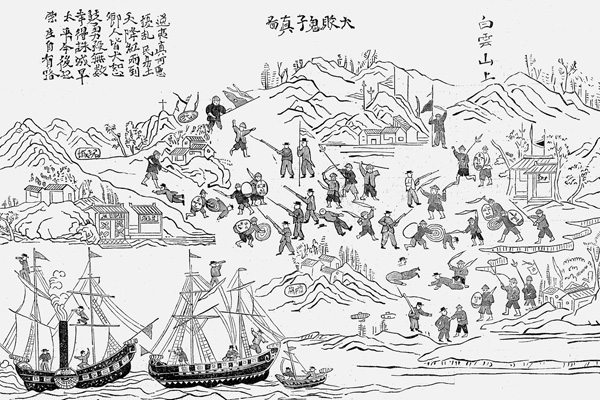
Guangdong also has 4,300km of coastline facing the South China Sea. The Pearl River Delta, where three rivers converge and surround hundreds of small islands, feeds into this sea; the region is also home to and a term for its major cities, including Guangzhou, Shenzhen, and the SARs of Hong Kong and Macau. European merchants sailing through the waters – particularly the Portuguese and British – traded extensively through Guangzhou. In an effort to contain foreign merchants and influence to confined quarters, the Qing Dynasty restricted all foreign trade to Guangzhou’s 13 Factories (the so-called “Canton System,” running from approx. 1757 to 1842), where European and American merchants established trading companies to transact with the Cohong, a Chinese merchant association, due to a restriction on foreigners from dealing directly with Chinese civilians. The European demand for silk and tea soon created a large trading deficit until the British decided to import opium. The complex story, of course, continues further from there.
Ignored Tags: $935C

The limited seclusion from the Mongols, the proximity to water (and its bounties), the import of foreign goods (and ingredients), and the sub-tropical weather does well for Guangdong, and created a sequestered environment wherein its people could develop a cuisine based on an endless supply of fresh ingredients, flora and fauna.

Restaurants began to flourish in Guangdong throughout the times of … (more…)

Continue ReadingA Discovery of Cantonese Cuisine — and Invitation to Dinner

Turkish Couscous

Couscous is a traditional staple of North Africa. It is also popular in parts of the Middle East. Jorge made a Turkish Couscous to complement the Pan Roasted Cilantro-Mint Marinated Chicken Thighs.

Turkish-Couscous-3-600x400

Couscous is a grain dish made by rolling and shaping moistened semolina wheat and coating them with finely ground wheat flour. This is a great substitute for rice. It cooks very quickly.

Ingredients

  • 5 cups quick couscous
  • 5 cups water or stock
  • 1/4 teaspoon turmeric
  • 2 cups diced tomatoes
  • 2 cups cooked peas
  • 2 cups raisins or dried cranberries (soaked and drained)
  • 1 mango (optional)
  • salt and pepper

Turkish-Couscous-1-600x400

Source: Jorge Viduenez

Prep time: 20 minutes;  Cook time: 20 minutes;  Yield 12 servings

(more…)

Continue ReadingTurkish Couscous

Join Us for Dinner at Long’s This Saturday?

I know it is kind of last minute but Suanne and I was wondering if any of you would like to join us in checking out the Chinese Restaurant Awards 2010 award winning dish at Long’s?

As some of you know, Suanne and I had been going around trying the CRA 2010 award winning dishes. We had come to a point where most of the remaining dishes are best eaten where there are about 6-10 people. This is so that we can try more dishes.

We had been to Long’s twice before (see here and here) and the food is absolutely amazing. Here are some of the food we tried, just to whet your appetite:

longsnoodlehouse-21-600x400longsnoodlehouse-23-600x400

longsnoodlehouse-3-400x600longsnoodlehouse-2-400x600longsnoodlehouse-4-400x600

longsnoodlehouse-24-600x400longsnoodlehouse-4-600x400

longsnoodlehouse-5-600x400longsnoodlehouse-6-600x400

longsnoodlehouse-7-600x400

longsnoodlehouse-20-400x600longsnoodlehouse-21-400x600longsnoodlehouse-23-400x600

The dinner will be on this Saturday, July 17th at 5:30PM. If you are interested to attend, please read on. (more…)

Continue ReadingJoin Us for Dinner at Long’s This Saturday?

Join Us for Kopi Luwak, Blue Mountain Coffee Tasting?

I had been talking about this for a long time. No more talk. Time to taste!

When I was blogging about Kopi Luwak many moons ago about the most expensive coffee in the world and wanted to try for myself what it is all about, PinoyGourmet sent someone to scour the whole of Manila to get some samples for us (thanks PinoyGourmet!).

Bannock-Salmon-Vancouver-2-600x400

At up to $500 per pound, Kopi Luwak which originates from Indonesia is the Rolls Royce of coffee. Believe it or not, this coffee is made from the poop of the civet cat. Oh yeah, these beans passed through the digestive system of the mammal.

You can get Kopi Luwak in Metro Vancouver. It is available in Spice Island Indonesian Restaurant … at $60 per cup (see their menu here; )!! Updated: 6th Nov 2014; the websiste no longer exist.

Blue-Mountain-Coffee-1

Then Carol heard about my quest for the Kopi Luwak, she gave us as a gift her precious 100% Jamaica Blue Mountain Coffee to us (thanks Carol!).

So with these two samples, Suanne and I invites you to join us in a fun blind tasting event. We have found someone who is willing to host this event and will also throw in a more common Italian branded coffee, Illy. Would you want to join us in this fun blind tasting event? For free!!

If so, read on … (more…)

Continue ReadingJoin Us for Kopi Luwak, Blue Mountain Coffee Tasting?

Exclusive Dinner Event at Miki Japanese Ramen House

Well, this is it … another event organized by chowtimes.  This time it is with Miki Japanese Ramen.

A few weeks ago, Miki Japanese Restaurant contacted us to help them in promoting a ramen slurping event. That event was covered by the local TV station (Global TV, I think) and was very well attended. Unfortunately, Suanne and I could not attend but instead we bounced off the idea of creating another event for chowtimes readers.

We were glad that Miki was not only supportive of the idea but they had also gracious giving us a deal that is going to be hard for you to pass up. Not that it matters to most of you, but Suanne and I want to say that we are not paid to do this. As in all events, we just wanted to do this for fun and put together events that we think our readers will enjoy.

Ramen-Noodle-with-Chopstick-600x600

Not only will you get to try any of Miki’s ramen, but you will be the first to taste the new specialties created by Chef Ben. [Chef Ben is not the same as Chowtimes Ben, mind you. Chowtimes Ben cannot stand the heat and stays out of the kitchen.]

Chef Ben wants you to try his new range of BBQ dishes among other dishes. Here is the menu …

Poster-468x600

This special menu is put together only for this event. Chef Ben wanted chowtimes readers to taste it and get your honest feedback. The estimated value of this menu is $21 but for this event, you are expected to pay a token sum of $5 (plus taxes and tips) only! It is not easy to get a better dinner deal than this.

For the ramen, you get the usual choices of broth like shio, shoyu, miso and others. I never have the chance to taste and differentiate between these broth at the same time. Well, in this event, you will be able to … (more…)

Continue ReadingExclusive Dinner Event at Miki Japanese Ramen House

A Discovery of Jiangsu Cuisine — and Invitation to Dinner

Updated: 9th Nov 2014; This restaurant is closed.

We are continuing our journey of the Eight Great Traditions of Chinese Cuisine next with the Jiangsu Cuisine.

A few weeks ago, we had our first dinner in Alvin Garden which was on the Hunan Cuisine. That event was a great success and was attended by 52 chowtimes readers. This next event is going to be an entirely different experience.

Dylan will be our cuisine lead for the next cuisine and this will be bigger and better … building upon what we learned from the last dinner. In Dylan’s words, he will be taking us on a journey from the rustic farm house in the Hunan province to the ancient Chinese capital in the Jiangsu province.

Yesterday, I blogged about the Shanghai Village Restaurant on Cambie which from the feedback I received I think you all are impressed. Well, guess what … the discovery of the Jiangsu cuisine will be in that very same restaurant. Read all the way below for the details!

Before you read on, you must imagine yourself in the palaces of the ancient Chinese capital of Nanjing.

Nanjing-Palace1-600x450
Source: Wikipedia

Here it is … the second in the series on the Eight Great Traditions of Chinese Cuisine … presented by Dylan:

The Jiangsu Province

To many Chinese Jiangsu is a special province in China. It is often considered that Jiangsu is the center of China. It is in this province that demarcation of the north and the south is the most noticeable. It is as if the north and the south China appears like separate country.

In 1987, Colin Thubron in his book, Behind the Wall: A Journey Through China said:

…the Yangtze redefines the country with a subtle absoluteness. It marks the immemorial divide between a soldierly, bureaucratic north and the suave, entrepreneurial south. Men dwindle in size and integrity as they go south (say the northerners) and the clear-cut Mandarin of Beijing becomes a slushy caress. The dust of the wheat and millet-bearing plains dissolves to the monsoons of paddy fields and tea plantation. The staple of noodles becomes a diet of rice, and the low cottages and symmetrical northern streets twist and steepen into labyrinths of whitewashed brick.

Jiangsu is defined by the Yangtze, which splits the nation, and the province, into north and south. Its topography is a bit like that of the Netherlands: flat and wet. It has a warm, subtropical climate and its fertile land produces world famous tea and rice.

Jiangsu-Province-600x481
Credit: http://www.sacu.org/

In imperial China, Jiangsu see-sawed between being … (more…)

Continue ReadingA Discovery of Jiangsu Cuisine — and Invitation to Dinner

Burmese New Year Water Festival 2010

A couple of weeks ago Suanne and I dropped by Bo Laksa King when we were in the neighborhood. We were going to the Chilean bakery next door to get some pastries. It was fancy bumping into Keev who was there having Bo’s Laksa.

Suanne and I were not there for food, having just had lunch. We just wanted to drop by and say hi. Bo and Tiffany are such a nice couple that we do not consider them as “blog topics”. We had become friends. I think many people who had been to Bo Laksa King can vouch how down to earth they are.

Anyway, while there Bo extended an invitation to Suanne and I to the Burmese New Year Water Festival. We were initially not sure of going because we did not know what to really expect. Oh boy … we were glad we did!
Burmese-New-Year-Food-19

The Burmese New New Year Water Festival is also known as Thingyan. Thingyan is normally celebrated in the middle of April over five days. This celebration is similar to the more well known Songkran festival in Thailand.

There were no water throwing here in Vancouver. Instead they do go around sprinkling water on everyone’s shoulders. The water symbolizes the cleansing of the bad things of previous year and starting anew.

It was only at the festival that we learned Bo was one of about seven people who put together the event. Apparently, they have been doing this for the past 10 years already.

Burmese-New-Year-Food-1

I was impressed with the organization and the turn out. It seems like half of Vancouverites of Burmese descent were here. Bo told us that there are only about 800 to 1000 Burmese living in Metro Vancouver.

Suanne and I learned a lot about the Burmese culture that day. There were many facets of the people we did not know. The Burmese are such gentle and humble people that we felt at home immediately.

The Burmese are generous people too. They will share whatever little they have and not expect anything in return. This festival is not funded by big corporations. Everything we saw was because of the hard work of everyone. And you are NOT expected to pay to attend this too … although they have a donation box at the entrance. They just wanted people to come and celebrate the new year with them.

Burmese-New-Year-Food-40

Even though Suanne and I did not understand a word of what was said the whole time we were there, we enjoyed ourselves. The music, both traditional and modern, were contagious. There was once when I was speaking with someone and when a popular song came on, he stopped talking to me in mid sentence, turned to the stage and sang along. We resumed the conversation only after the song ended. LOL!

Yeah, the Burmese are boisterous alright.

Burmese-New-Year-Food-42

Bo Laksa King was first discovered by the Vancouver chowhound community. The chowhounders were all raving about his laksa and Burmese specialties. But Bo is very conservative. He sticks with just a small menu and he brings out a few specialties only once a while. The chowhounders were once discussing plonking down $50 each for Bo to cook up a dinner for them. That did not materialize but you can imagine how many people are eager to see what Bo has up his sleeve.

Well … ladies and gentleman, boys and girls. This is THE event where you can get Bo’s specialties … and it is all you can eat too!

There must be almost … (more…)
Continue ReadingBurmese New Year Water Festival 2010

A Discovery of Hunan Cuisine — and Invitation to Dinner

We are going to start our journey of discovery of the Eight Great Traditions of Chinese Cuisines with the Hunan cuisine. I would like to take this opportunity to invite chowtimes readers to join the 8GTCC team in an authentic Hunan dinner on April 10th at the Alvin Garden restaurant. The details of the dinner are at the bottom of this post.

In the words of LotusRapper, the menu is considered festive and complete when the menu consists of at least one treasure from:

  • the Land (pig, cow, lamb)
  • the Water (seafood)
  • the Sky (fowl)
  • Nature (mushroom, vegetarian choices)
  • Cold Dish
  • Soup

The discovery of the Hunan Cuisine is led by fmed who had spent countless hours doing research on the Hunan cuisine and carefully picked the representative dishes of the cuisine. This is of course well supported by the rest of team who had done its part in cross-checking information and provided valuable input in the research.

Alright. Here it is … Hunan Cuisine as presented by fmed:

Introduction to Hunan Cuisine

Though Hunan cuisine (also called Xiang Cai 湘菜, after the river Xiang) has a long history spanning back over two thousand years, I just can’t imagine what it would have been like without the chili pepper, introduced into the region a mere 400 years ago by European traders. Hunan cuisine – one of the world’s spiciest – without the chili pepper heat? It seems unthinkable.

The chili pepper came to China from the Americas in the late Ming Dynasty (around 1600) and the Hunanese may have been the first in regional Chinese cuisines to adopt it. By the end of 17th century, the chili pepper became central to the cuisine.

Chilli-Travels-World-Small
Credit: http://www.chillies-down-under.com/ — Click on map above to read of migration of chili worldwide

Some of the oldest written texts about Chinese food culture were written over 2000 years ago in Hunan province, around the modern day city of Changsa. Back then, Changsa was one of the cultural centers of China known for its poets, artisans and cooks. Hunan cuisine is highly influential in Chinese cooking, but it plays second fiddle to the more famous, elaborate, and perhaps more sophisticated Sichuan cuisine.

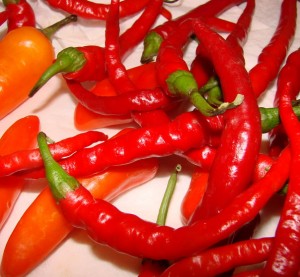
hunansaltedchili-300x277In gastronomic terms, Hunan cuisine is often compared to Sichuan cuisine in its lavish use of the chili pepper. Sichuan and Hunan cuisine are both quite hot and spicy. The Sichuanese, however, use the palate numbing Sichuan peppercorn, and a number of special cooking techniques that tend to mitigate their dishes’ heat. When cooking, the Hunanese tend to use chilies as an ingredient more minimally, though resulting in dishes with a ferocity of heat unmatched by any cuisine in China or nearly any other cuisine in the world. (More on Sichuan cooking and its varied use of chilies later on in this series).

Hunan cuisine isn’t all hot and spicy: like all Chinese cuisine, the balance of flavours is critical. Some dishes are deliberately mildly spiced as a counterpoint to the hotter dishes.

The Hunan Province

Hunan

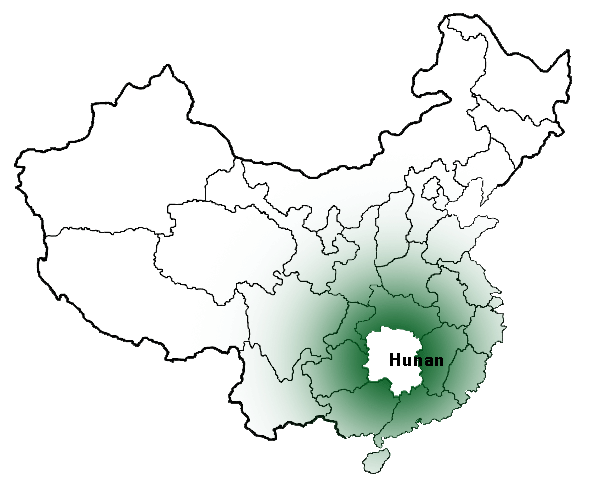
Subtropical Hunan is a land-locked province in southern central China, and known for its high agriculture output and fresh produce. Hunan literally translates to “south of the lake,” a reference to Dongting Lake. Dongting Lake is where two of China’s largest rivers, namely the Xiang and the Yangtze, flow. Much of Hunan is a flood basin which accounts for its fertile soil and its historically agrarian culture.

It has four distinct seasons, with winters cool and damp, and summers humid and sweltering. The year-round availability of fresh ingredients gives the cuisine its freshness and colour. Chili peppers are, of course, a key defining ingredient.

Characteristics and Flavours of Hunan Cuisine

The following is an simplified overview; please refer to the Recommended Readings section below for a more complete look at Hunan cooking.

  • Hot and Sour — is the main flavour profile (“suan la”) – from Fresh and Salt-Pickled Chili Peppers
  • Salty — from fermented bean pastes and pickles
  • Not Sweet — sugar and savoury don’t mix for the Hunan palate
  • Smoky — from Smoked Meats
  • Fresh — Fresh and Colourful Produce

Key Ingredients of Hunan Cuisine

doulajiao-269x300One of the most common condiments in Hunan cuisine is the tart, salt-pickled chili. This ingredient is used as a cooking ingredient and as a tableside condiment. Pickled chilies thus provide Hunan cuisine with its signature hot and sour flavour profile. The Hunanese incorporate chilies into their dishes in the form of their pickled peppers, chili pastes, and less commonly in the form of dried chili flakes, fermented bean-and-chili paste, and chili oil. The most common pickled-pepper is duolajiao 剁辣椒, a coarsely chopped and pickled red chili. The peppers are a completely edible component of the dish, rather than a mere flavourizing ingredient as in certain kinds of Sichuan cooking, where it is often not eaten. This accounts for much of the heat in the Hunanese food.
Saltiness is derived from the liberal use of salty pickles and variety of fermented beans and bean pastes. These fermented bean ingredients also infuse the dishes with a dark savouriness. The common salted black bean found throughout Chinese cuisine is thought to have originated from Hunan province over 2000 years ago.

One flavour that does not harmonize with Hunan cuisine is Sweet as the Hunanese have an aversion to any sweet and savoury combinations in their cooking. Except for certain exceptions (for example, the use of caramelized rock sugar to colour a braise), sweet-savoury dishes are not part of the Hunanese culinary repertoire.

The bacon-like smoked pork from mountainous western regions of the province provide a savoury smokiness to certain dishes. Smoked bacon is first steamed before incorporation into everyday cooking. Other commonly smoked ingredients are duck, chicken, carp…even tofu and bamboo shoots.

The Hunanese also use a limited palette of spices which they call … (more…)
Continue ReadingA Discovery of Hunan Cuisine — and Invitation to Dinner

The Eight Great Traditions of Chinese Cuisine

Well, Vancouver, turn up your speaker and listen to this:

[audio:https://chowtimes.com/wp-content/uploads/2010/03/Vancouver-this-is-it.mp3|titles=Vancouver-this-is-it]

Does anyone recognize the historic sound bite? Bragging rights goes to the first person who can tell me what that sound bite is from.

—– ooOoo —–

He he he … Well, Vancouver, Vancouver, THIS IS IT!

After a couple of months of work, we can take now the wraps off of the Eight Great Treasures of Chinese Cuisine. The 8GTCC project is an attempt on my part to learn more of the rich heritage of Chinese cuisines. Although I am of Chinese heritage, I had always taken Chinese food for granted. I thought I know a lot about Chinese food but as I write about Chinese food on chowtimes, I realized how little I know.

In January, I first posted of my desire to embark on a journey to learn about each of the Eight Great Traditions of Chinese Cuisine. I knew that I could no do it on my own and so I roped together a few individuals who could help me pull this off and in the process I get to learn from them!

What Is The 8GTCC Project?

The 8GTCC project is a series of dinners based on the 8GTCC that we are organizing for chowtimes readers. It is an invitation to our readers to join us in discovery and tasting each of the regional cuisines.

We will be exploring each of the eight cuisines (Anhui, Cantonese, Fujian, Hunan, Jiangsu, Shandong, Sichuan and Zhejiang) every four to six weeks. We have identified the first cuisine — Hunan!

The Hunan cuisine will be a fiery introduction to the 8GTCC … that much I can tell you. It is also a very apt cuisine to start off from the aspect of world history. It is in Hunan about 18,000 years ago that the Chinese invented fired pottery. That is humanity’s earliest known cooking pots and the beginnings of culinary innovations that made the cuisine into what it is today.

We will follow-up with more info tomorrow but for now, keep this date in mind … April 10th which is a Saturday.

About The Team

There are six of us on the team. I thought it is best that I introduce them to you.

fmed – I think many of you foodies out there knows that famous pseudonym. I am not exaggerating when I say that he is the de facto authority of food in Metro Vancouver. You just need to follow the chowhound forum among many others and you will see for yourself how much he is in touch with the food scene in the city. He prefers to remain anonymous and hide behind that fmed handle. Join us in the dinners and get to know the real person.

Dylan – He is a gem of the team and I am so amazed with this young man. I would say he is the kind of guy who you want your daughter to bring home. Unfortunately, he’s married but you know what I mean. He is the only person on the team who reads Chinese and I want you to come and meet him. Your jaws will drop when you meet him in person — really. Not only does Dylan reads Chinese, he is actually a Chinese literature expert.

Joe – Joe is another multi-talented guy. I would say he is the second kind of guy who you want your daughter to bring home … a close second to Dylan. Joe had started blogging on vancouverslop.com which I enjoyed reading — very well written. Well, he used to be a magazine editor in a past life and he is the one who mercilessly tears apart fmed’s write-up on the Hunan cuisine. Huh … let me tell you this … if you think you can sue us for food poisoning or something like that, you better think twice because Joe is on the team. I think you will like Joe.

Keev – He was the first to respond when I called for helpers for this project. He had experience in Chinese cooking but his is formally trained in classical French cooking. He had traveled to China where visited markets, met fishermen, farmers and tasted street  and home cooked meals.

LotusRapper – Like fmed, he is shy. He wants to be known as LotusRapper because he is also proud of that pseudonym. Formally, he wants to be known as “LotusRapper (r) since 2003”. Hmm … how else should I describe LotusRapper? I think LotusRapper was the fmed of yesteryears … something like that. He was prolific foodie until he had kids and all the dining outs took a backseat. Mind you, he still has that touch. So don’t mess with him.

Ben and Suanne – Ben and Suanne are counted as one. I don’t think we need any introduction but shoot me a question if you have any.

I have nothing but praise for the team. They are so committed to the project like you won’t believe. Not only are they putting in personal time and effort to do research, they even go for tastings on their own to check out the food — with their own expenses.

The Modus Operandi

The most important thing we believe is … (more…)

Continue ReadingThe Eight Great Traditions of Chinese Cuisine